AI / decision science
JWA‑PyTorch
Open-source PyTorch toolkit for the Joint Weighted Average operator, with differentiable aggregation layers, weight learning, and visual diagnostics.
AI Researcher · Physics PhD
Information aggregation · Uncertainty quantification · Explainable decision models

An intrinsic thirst for knowledge has led me on a journey of discovery through astrophysics and AI, from the intricate dance of X-ray black hole binaries to the fundamentals of how information is aggregated into a decision. I earned my Ph.D. in Physics from Montana State University, Bozeman, supported by NASA’s Swift Guest Investigator program.
Today I am a Research Fellow in human-centric AI at LUCID, the Lab for Uncertainty in Data and Decision Making in the School of Computer Science at the University of Nottingham. I work on information aggregation operators, the mathematical models of how evidence from many sources is combined, and on making those models learnable, identifiable, and interpretable enough to be trusted in real decisions.
What carries across both halves of my career is the same instinct: build the statistical framework carefully, quantify what you do not know, and ship the tooling so other people can use it.
Current work · 2025 → present
Most aggregation methods pick a side. Some weight the source, asking whose opinion counts more. Others weight the evidence, asking how much the largest or smallest value should matter. The Joint Weighted Average (JWA), introduced by Broomell and Wagner, does both at once, combining the Linear Weighted Average and the Ordered Weighted Average through compositional geometry. This flexible approach makes it a good candidate for modelling the human decision process albeit an unusually awkward one to fit.
Open source
A PyTorch toolkit for the Joint Weighted Average operator: differentiable LWA / OWA / JWA / constrained-JWA layers, a gradient-based training pipeline for learning weights from evidence, and ternary-plot, heatmap, and bar-chart diagnostics for inspecting what was learned.
Lead author on the accompanying toolkit paper, to appear at FUZZ‑IEEE 2026.
Ph.D. · 2021 – 2025
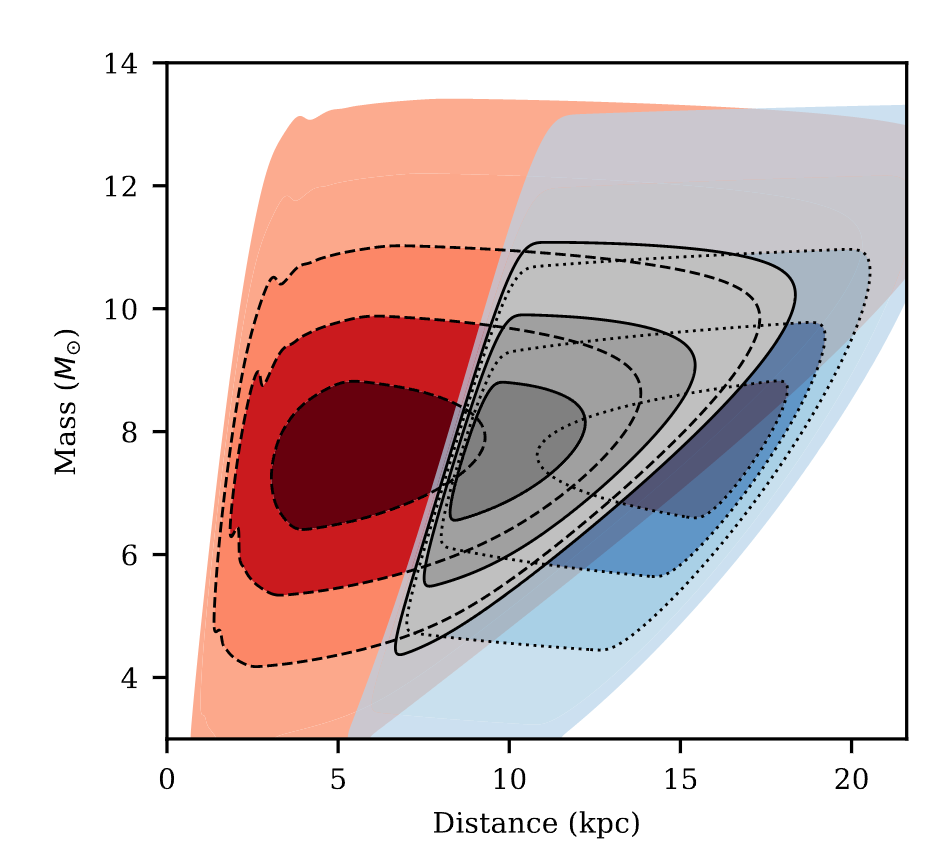
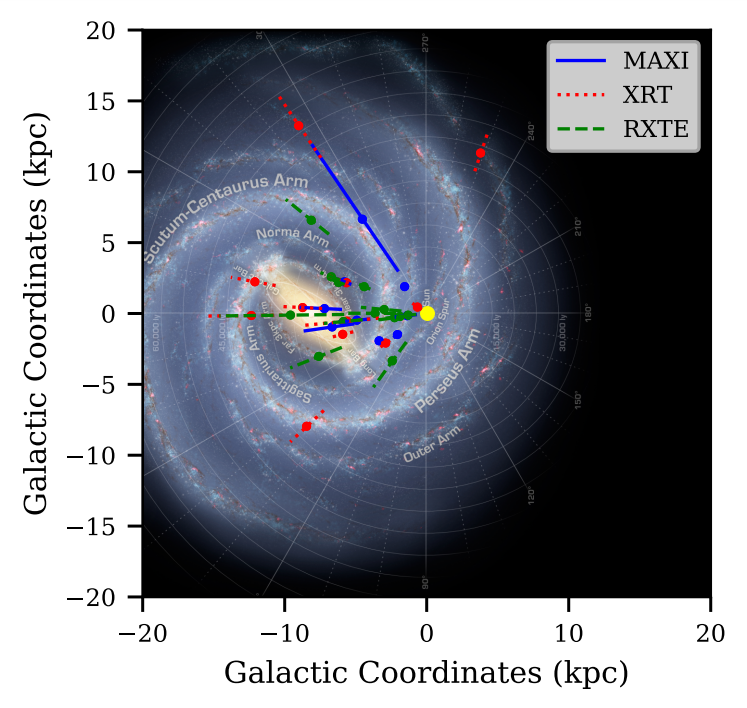
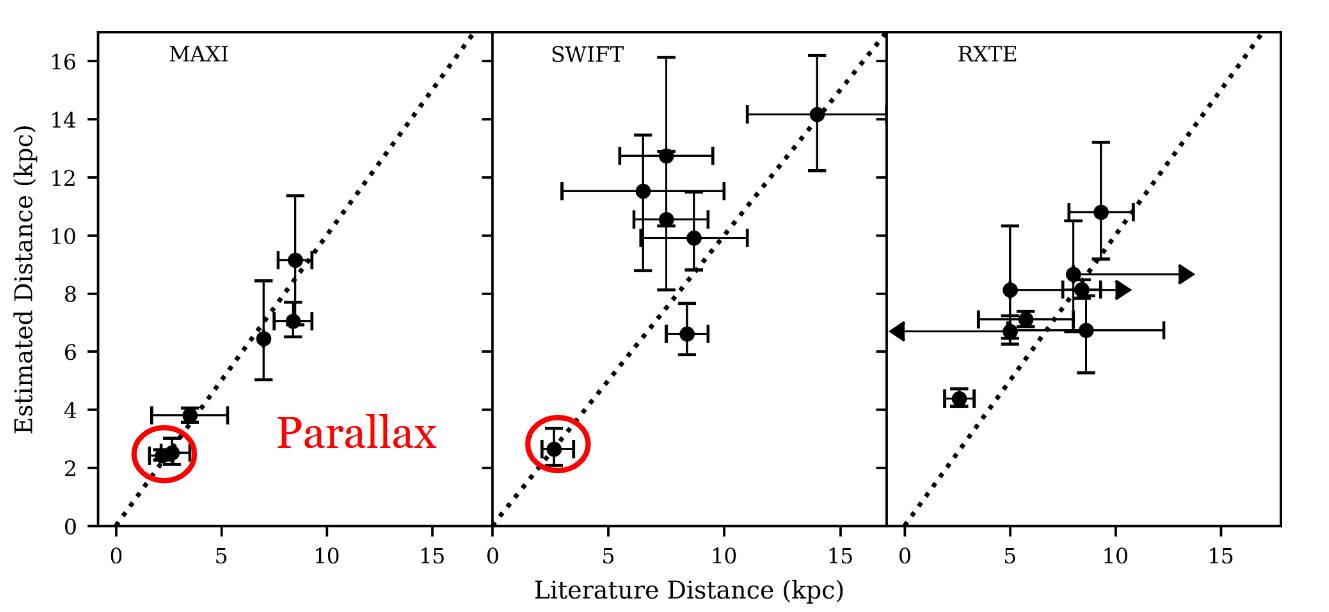
Supported by NASA’s Swift Guest Investigator program, I estimated the distances to black hole X-ray binaries using a Bayesian approach. I built a statistical framework that folds together the best current observational and theoretical knowledge to produce distance probability densities, constrained 26 systems with MCMC, and made the results readily available to the astrophysical community. I then used those distances to take a new, independent look at how black hole low-mass X-ray binaries are distributed through the Milky Way.
Alongside the population work, I trained GRU and CNN models on augmented X-ray time series to infer accretion disk parameters, a small-data problem solved with careful, physics-aware augmentation rather than more labels.
AI / decision science
Open-source PyTorch toolkit for the Joint Weighted Average operator, with differentiable aggregation layers, weight learning, and visual diagnostics.
Astrophysics tooling
A Bayesian distance estimator for black hole low-mass X-ray binaries, plus a hosted tool for rapid estimation and a table of published estimates for known sources.
Monitoring
Live hardness–intensity diagrams tracking the outburst states of transient black hole binaries.
Machine learning
K-means clustering of black hole spectral states, recovering the canonical accretion states from unlabelled observations.
Statistics
A statistical study of detected exoplanets’ distances in R, using regression and model selection on survey catalogues.
Everything else
Pipelines, notebooks, and smaller experiments across AI and astrophysics.
JWA‑PyTorch: an Open-Source PyTorch-based Toolkit for the Joint Weighted Average Operator
Lead author: toolkit development, analysis, and writing.
Supervised Learning the Joint Weighted Average — Unique Solutions and How to Find Them
Lead author: analysis and writing.
A new independent look at the galactic black hole low-mass X-ray binary distribution
Lead author: analysis and writing.
A Dependable Distance Estimator to Black Hole Low-Mass X-ray Binaries
Lead author: analysis and writing.
A spectral study of GRS 1915+105 during its March 2017 NuSTAR observations
NASA Swift Guest Investigator, Cycle 19
American Astronomical Society, 243rd Meeting
I am open to opportunities and collaborations in AI research and engineering. Feel free to get in touch about information aggregation, uncertainty quantification, explainable AI, or my astrophysics work.